Kitchen Remodeling
Designing a Kitchen Layout Around Daily Rituals in Washington DC
By
Amber Niewald
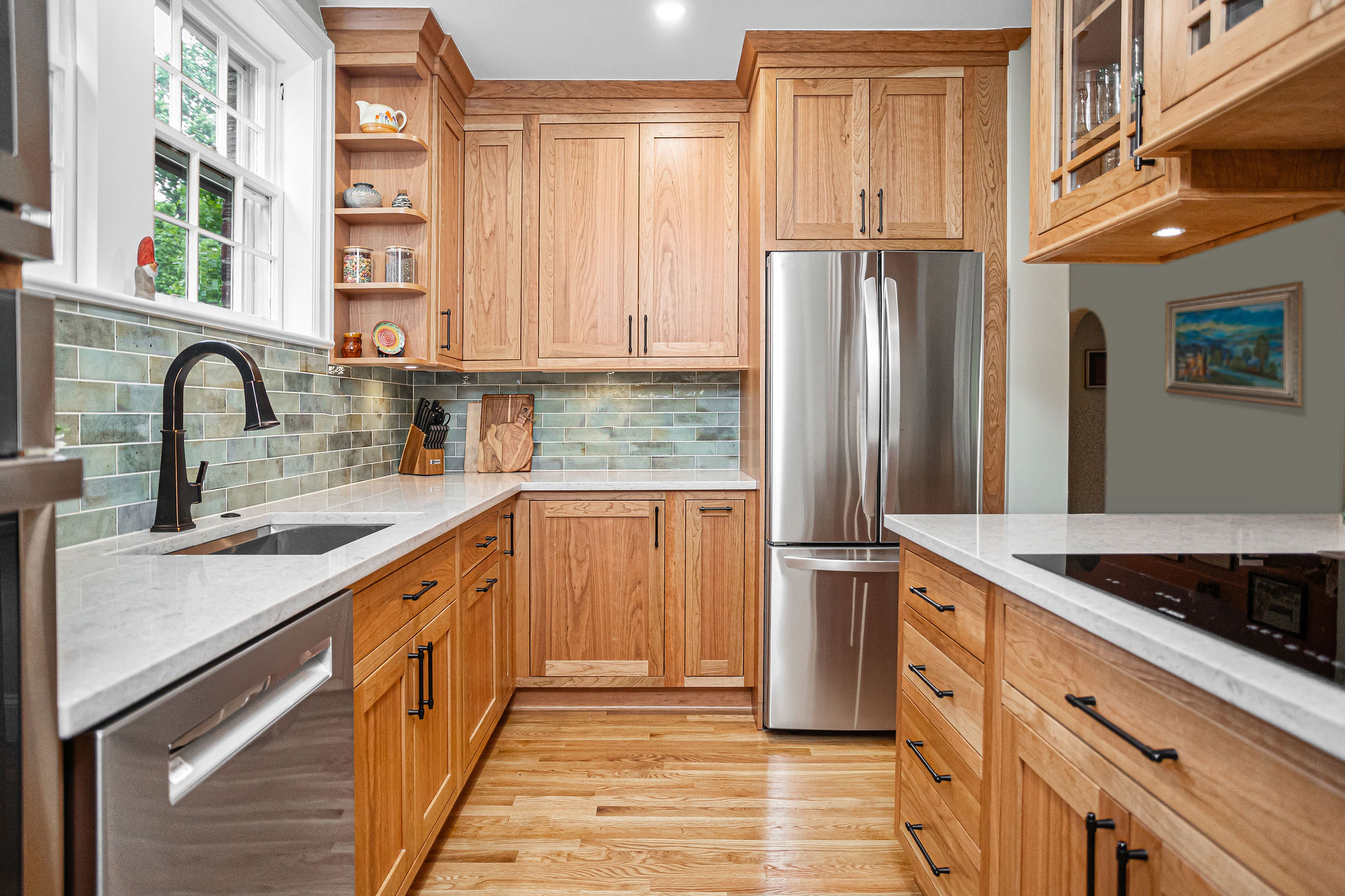
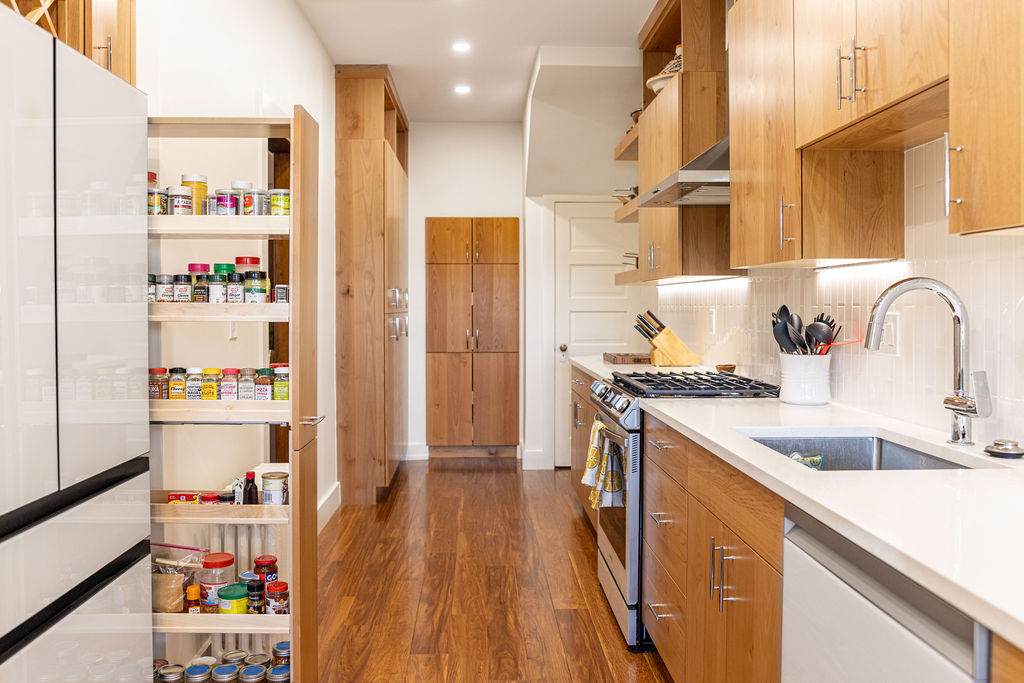
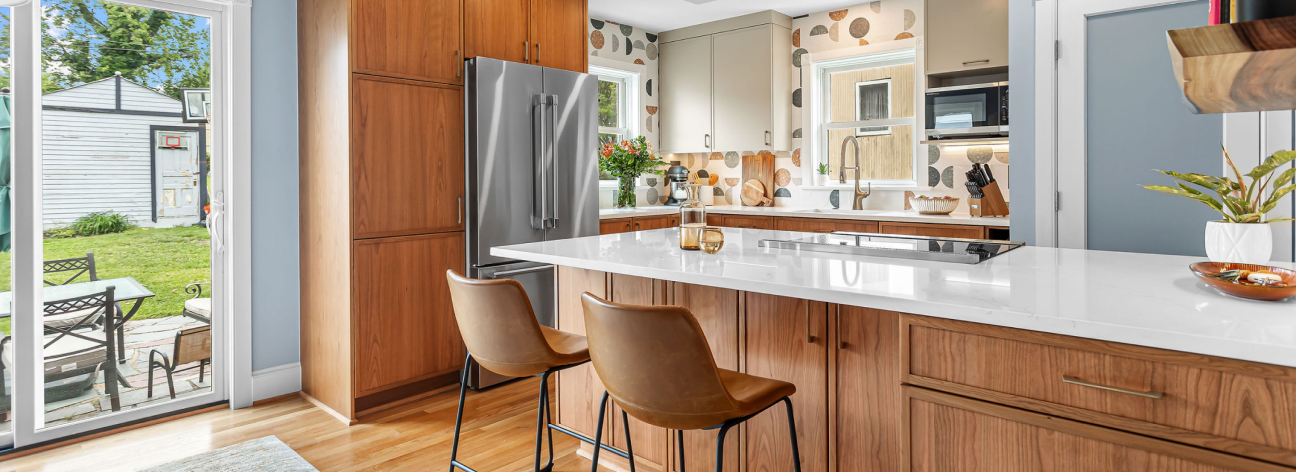
DC kitchens vary considerably in scale and character, from the more defined layouts of Takoma Park colonials to the varied floor plans of Silver Spring Cape Cods and split-levels. When selecting warm kitchen cabinets, what works across all of them is cabinetry that feels considered rather than decorative: clean lines, warm wood tones, and storage organized around how the space is actually used.
In Washington DC homes, that combination of simplicity and warmth is less about following a direction in design and more about choosing materials that age well and feel right for the home they are in. In pre-war housing stock especially, warm wood cabinets introduce natural texture without competing with the architectural details already present in the room.
Warm kitchen design is not a single aesthetic and it is not the right direction for every homeowner. It is a considered choice, and it means something specific.
A warm kitchen reads as grounded rather than cool. The materials have natural variation. The tones pull toward amber, honey, walnut, and oak rather than white, gray, or gloss. The overall effect is a space that feels settled and lived-in without feeling busy or heavy.
This is often where a well-planned kitchen remodeling project begins, particularly in Washington DC homes where cabinetry plays a central role in how the space functions day to day.
This is different from kitchens that lean more colorful, rustic, or traditionally styled, where the overall look is defined by style rather than material. A warm kitchen cabinet paired with clean hardware and simple countertops can sit comfortably inside a very modern, minimal room. Warmth comes from the material, not the style.
For homeowners who want a kitchen that feels calm and grounded at the end of the day, warm cabinetry is usually where that quality begins.
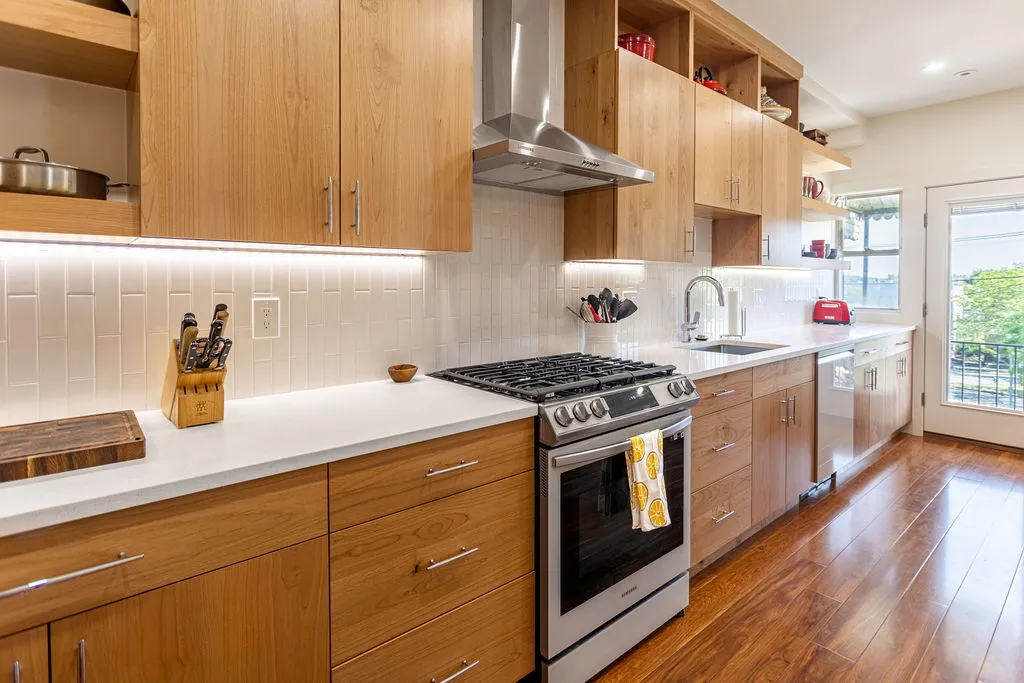
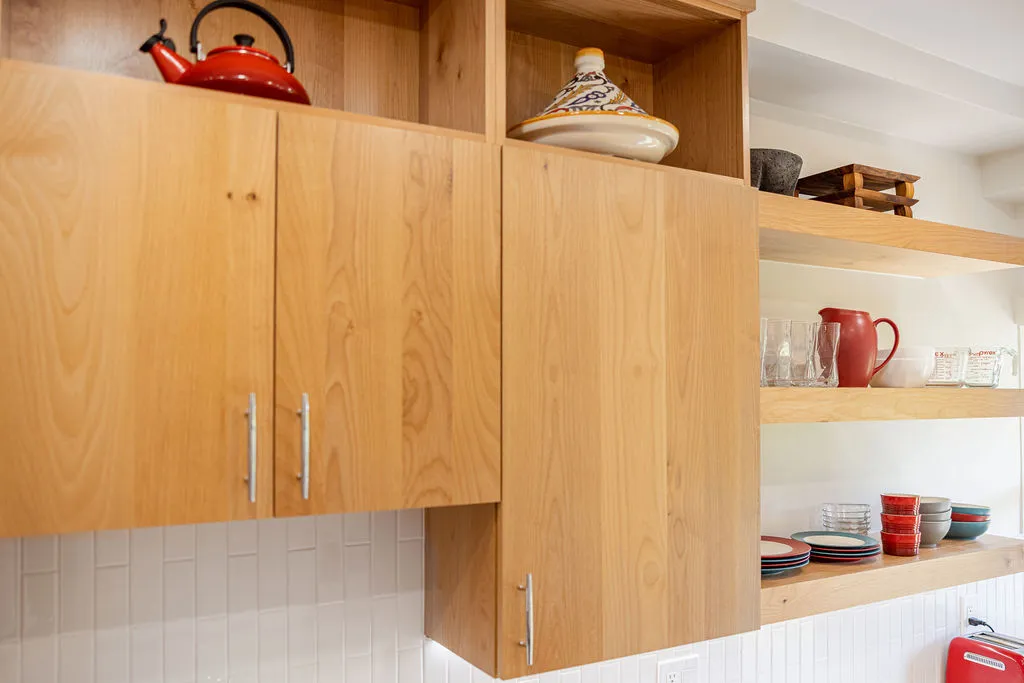
Minimalist kitchen cabinets do not have to mean cold or stark. The shift many DC homeowners are making is toward modern minimalist kitchen cabinets that use natural wood rather than painted finishes, matte rather than gloss, and warm tones rather than cool ones. The result is a kitchen that is clean and uncluttered but still feels like part of the home.
This works particularly well in pre-war housing stock, where the architecture already has warmth built into it. A flat-front cabinet in white oak or ash sits quietly in a Capitol Hill rowhouse in a way that a high-gloss white cabinet often does not.
The best wood for kitchen cabinets depends on three things: how much grain variation you want, what tone you are working toward, and how the wood will hold up over time.
For a warm, minimal look, three species consistently perform well.
White Oak White oak is the most versatile choice for warm wood cabinets. Its grain is prominent but not busy, and its tone sits in the light-to-medium range that works across most DC kitchen sizes. It accepts stain well, holds up in high-traffic spaces, and ages in a way that feels intentional rather than worn.
Walnut Walnut brings deeper, richer tones and a straighter grain that reads as calm and considered. It pairs well with matte black hardware and stone countertops. It is softer than oak but well-suited to kitchens where the cabinetry is the primary design decision in the room.
Ash Ash has a bolder grain than oak and typically comes in lighter, creamier tones. It works well for homeowners who want warmth but not darkness, and for kitchens that get a lot of natural light.
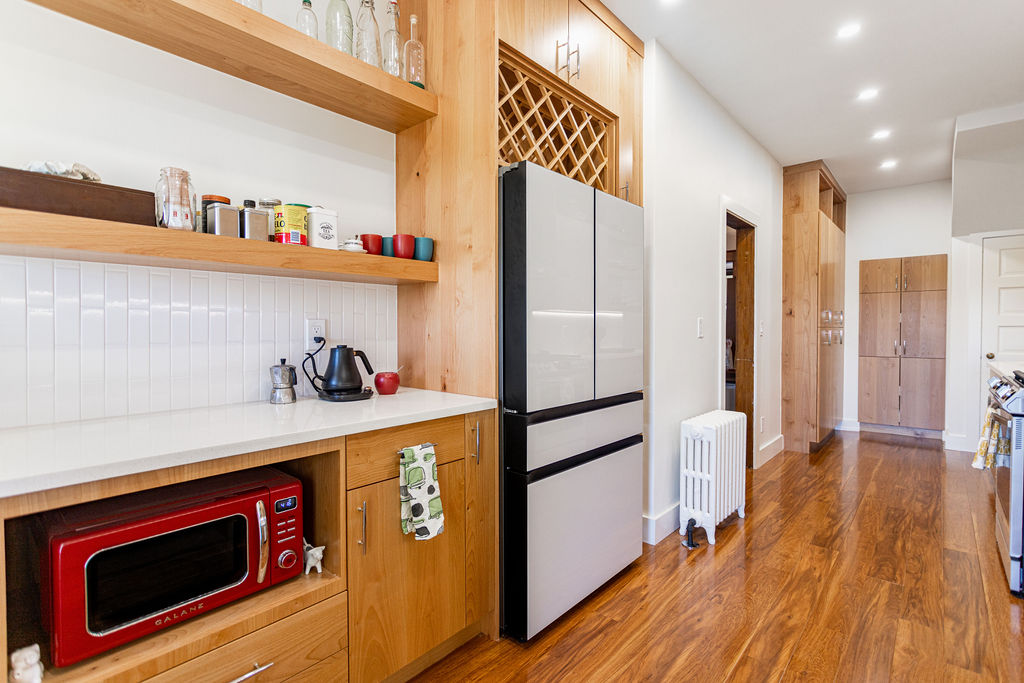
Which kitchen cabinets are best quality is a question about construction as much as material. Box construction, drawer glide hardware, finish durability, and how the face frame is built all determine how a cabinet holds up over ten or twenty years. Species selection matters, but it is only one part of what makes a cabinet last.
Every Zen kitchen includes cabinetry through our partnership with Crystal Cabinet Works, a family-owned manufacturer with 76 years of production experience, built in the United States and backed by a limited lifetime warranty.
For homeowners investing in high end kitchen cabinets, the quality of materials and level of customization become just as important as the overall design direction.
Crystal is integrated into the design process from the first schematic, not sourced afterward. That means your cabinet dimensions, wood species, finish, and hardware are all shaped by your specific layout and how you use the space, not selected from a standard catalog.
For homeowners focused on warm kitchen design, Crystal's range of wood species, stain options, and matte finishes gives a designer the specificity to get the tone exactly right for the room.
Cabinetry sets the tone of a kitchen, but it doesn't work in isolation. The way a space is lit changes how wood tones read at different times of day. Our guide on warm kitchen design lighting for DC homes covers how those two decisions work together.

Cabinetry decisions are made alongside you. Your designer works through wood species, tone, grain, and hardware in the context of your layout, your natural light, and how your household actually uses the kitchen. Because your designer and builder are part of the same team working from the same plan, every choice you make is grounded in the reality of your space from the start.
Calm by design, our process provides clarity and structure throughout your renovation. You make the decisions; we guide the experience.
We start with a 30-minute call to understand your goals and confirm we are a fit. If it feels right, we schedule an on-site visit to walk your space, take measurements, and explore what is possible within your budget.
Your designer guides you through two phases, schematic layout and detailed finish selections, with your budget and how your family lives at the forefront of every decision. All elements are considered together, not assembled separately.
Your dedicated project manager becomes your single point of contact. They coordinate DC permitting, manage material deliveries, and oversee construction from demolition through finishing details.
We walk the space together to confirm everything functions as intended. Every renovation comes with a five-year workmanship warranty along with Crystal Cabinet Works' limited lifetime warranty.
Learn more about our complete process.
Ready to explore what warm cabinetry looks like in your kitchen? Schedule a 30-minute consultation to get started.


.avif)


