Kitchen Remodeling
Kitchen Island Sizes: Finding the Perfect Fit for your Washington DC Home
By
Amber Niewald
The iconic Washington DC rowhome sets the rules. Work with those rules and the design gets smarter, calmer, and more usable.
Rowhomes are long and narrow with limited side windows and a strong front-to-back orientation. That layout reflects more than a century of local history and density. A thoughtful Washington DC kitchen flow design follows that same logic. The goal is to support the natural front-to-back movement already embedded in the structure and map the kitchen to your household's real patterns.
As the connector of the home, the kitchen has to carry people through the space while giving cooking, storage, and gathering their own clear zones.
Design your D.C. rowhome kitchen remodel with intention by working with (not against) the narrow footprint. Optimize for a distinctly urban space instead of imitating open-plan suburban layouts.
The long, narrow layout influences how light travels, how sightlines connect spaces, and how a family moves through the day. Think of it as a strength, not a weakness:
Some rowhome kitchens open beautifully when walls come down. Others benefit from defined transitions that create visual connection without sacrificing function. It depends on your space and goals.
Successful rowhome kitchens are planned around real family rhythms. Clear paths for school mornings, efficient work zones for weeknight dinners, flexible transitions for weekend entertaining.
The front door to the rear forms the spine of movement in a rowhouse. A kitchen positioned along this axis functions as a connector, not a barrier. Small adjustments preserve the home's sightline and shift how people move through the space.
Not every wall needs to come down. Sometimes a partial opening or widened doorway maintains necessary separation while improving flow.
When horizontal space is limited, vertical thinking changes what's possible. Tall cabinets, well-placed shelves, and thoughtful use of height support storage without crowding the floor plan.
Most Washington DC rowhomes date from the 1880s through 1930s. That era produced specific structural patterns, common challenges, and recurring opportunities.
We're rooted in these neighborhoods. With design studios in Capitol Hill and Takoma Park, we're anchored in the communities where we live and work. Over 30 years, we've learned the typical framing systems, floor joist configurations, and load-bearing wall placements in DC rowhomes. We know which structural changes require additional support and which openings align naturally with existing conditions.
Historic considerations and permitting processes in DC neighborhoods follow established patterns. During a Capitol Hill kitchen renovation, historic review boards and preservation guidelines often influence what structural modifications are possible. Our local expertise means we navigate historic review boards, preservation guidelines, and permitting requirements efficiently. Knowledge of these requirements prevents delays and keeps timeline planning realistic from the start.
Calm by design, our process provides clarity and structure throughout your rowhome kitchen remodel. You make the decisions, we guide the experience.
Our process begins with a 30-minute call to review your goals and confirm alignment. If it's a fit, we schedule an on-site visit to explore your rowhome's unique flow, take measurements, and identify opportunities within your budget.
Complimentary Kitchen Mock-Up
Before any contract, we may offer a 3D design rendering using our photorealistic Chief Architect system. For rowhomes, you can see exactly how opening a wall affects sightlines or how vertical storage works in a narrow layout.
As a design+build firm, design decisions, pricing, and construction planning happen together. Your designer guides you through two phases - schematic layout and detailed finish selections - keeping your budget and rowhome's structural realities aligned at every decision point.
Once contracts are signed, a dedicated project manager becomes your single point of contact. They coordinate permitting (including historic district requirements), manage material deliveries in narrow streets, and oversee construction from demolition through finishing details.
Progress happens while you continue your routines. When decisions arise, they bring you solutions with clear cost implications before proceeding.
We walk the space together to confirm everything functions as intended - the flow works, sightlines are clear, and storage is intuitive. Every remodel comes with a five-year workmanship warranty along with Crystal's limited lifetime warranty.
Learn more about our complete process.
Financial clarity from the start is part of how we work. During your initial consultation, we establish a preliminary budget range based on your goals and what we see in your space. This early clarity means design decisions stay grounded in financial reality, not guesswork.
A full kitchen remodel in Washington DC typically ranges from $75,000 to $200,000 based on scope, finishes, and structural considerations. Before any contract is signed, you'll know exactly what your renovation will cost and what you're paying for.
View our pricing and what to expect for your rowhome remodel.
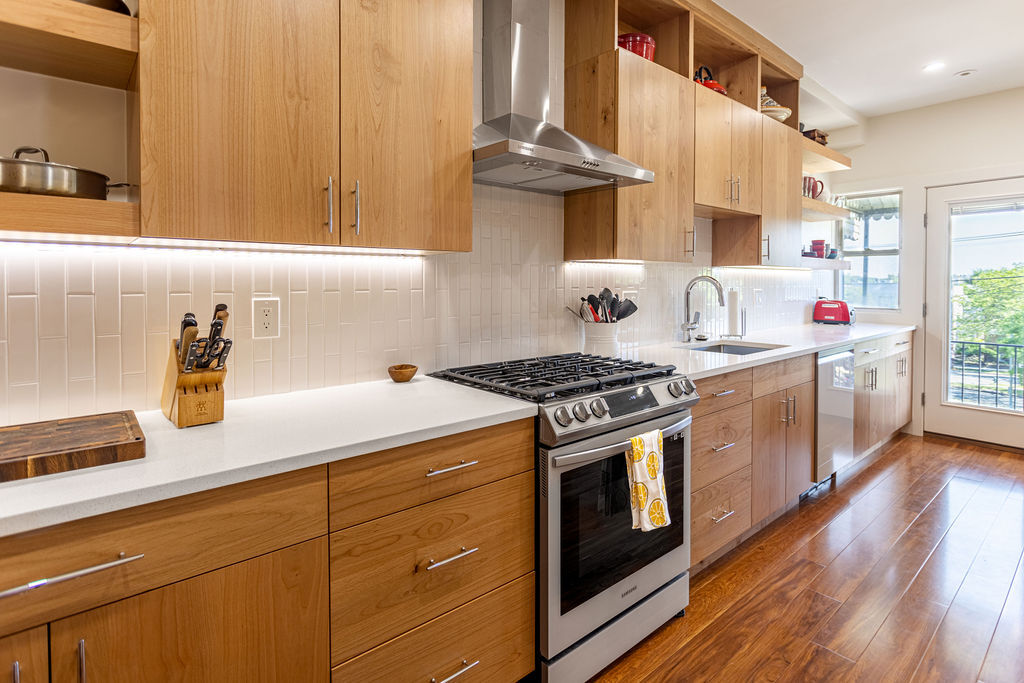
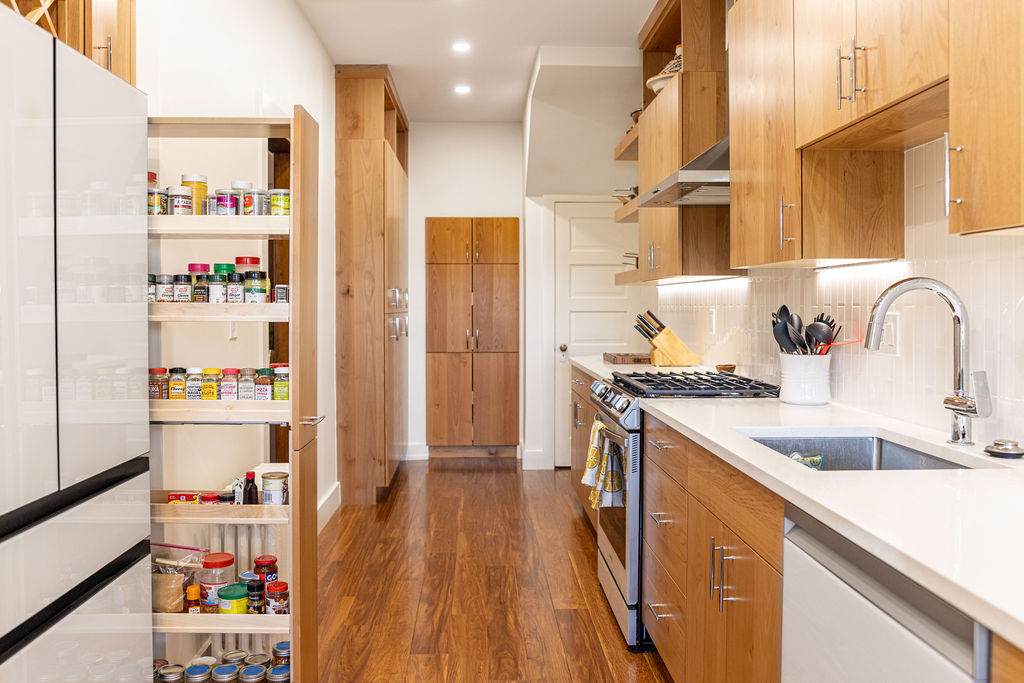
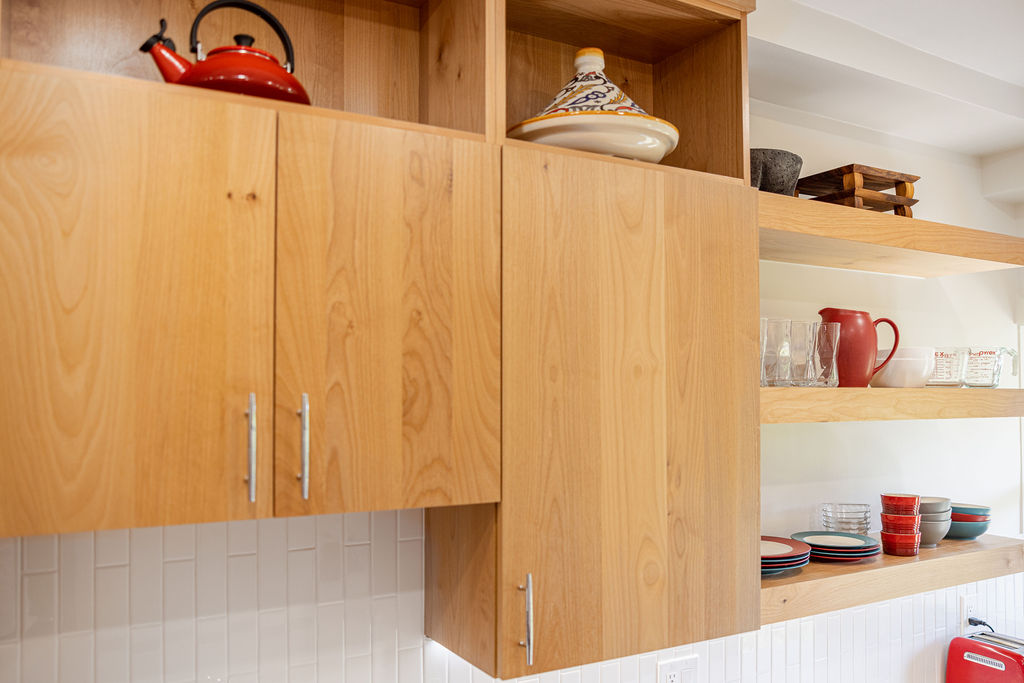
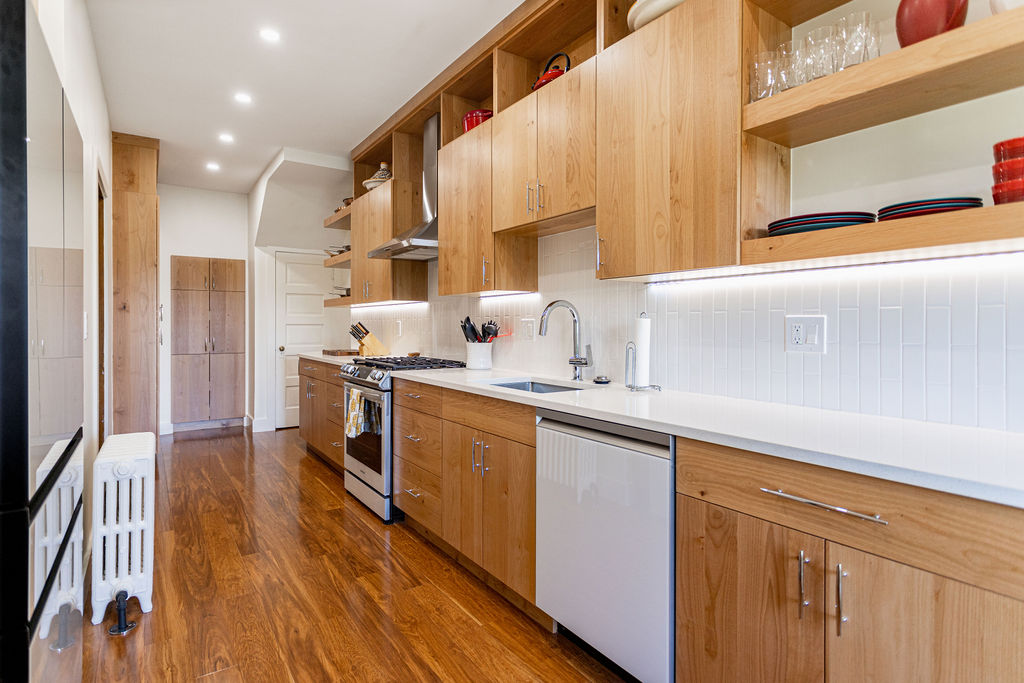
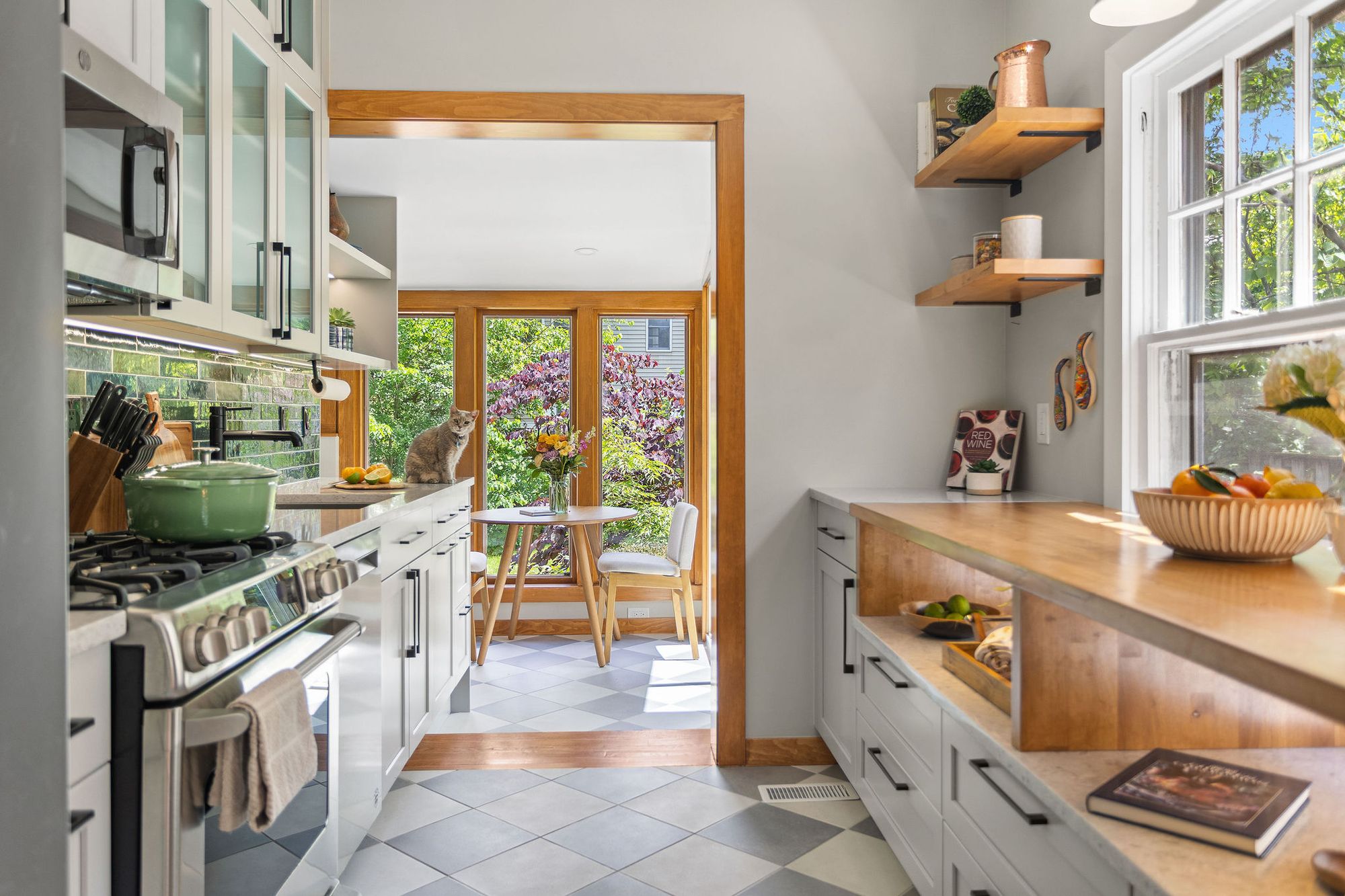
In a Brightwood rowhome kitchen remodel, the narrow galley kitchen needed to blend mid-century design into a federalist period rowhome - in four weeks. We reconfigured work zones to improve circulation without removing walls. Floor-to-ceiling cabinetry maximized vertical storage, while a high-gloss backsplash and open shelving brightened the space.
Flow improved because we designed for how the family actually lived, not how a standard layout dictated.
A kitchen that supports your family's rhythms reduces friction in daily life. It makes mornings calmer for growing families and daily routines easier for aging in place. It turns weeknight cooking from a chore performed in isolation into an activity integrated with the rest of the home.
Washington DC rowhomes have supported family life for more than a century. A limited footprint still has limitless potential if you know what you're working with.
Our experience with DC rowhome renovations creates a planned and steady process that respects your time, energy, and family.
Ready to talk through your rowhome kitchen? Schedule a 30-minute consultation to review what's possible.
Zen Renovations is an award-winning design+build firm serving the Washington DC metro area from studios in Capitol Hill and Takoma Park. With 30+ years navigating DC permitting and historic preservation guidelines, our in-house team guides homeowners through a renovation process that is calm by design.


.avif)


