Kitchen Remodeling
Washington DC Kitchen Flow Design for Historic Rowhomes
By
Amber Niewald
A kitchen carries more than most rooms. It's where the morning starts before anyone is ready for it. Where weeknight cooking happens alongside homework and conversations that can't wait. Where the weekend finally slows things down and the house feels like itself again.
When a kitchen is designed around those rhythms, everything in it feels considered. When it isn't, the friction shows up every day.
School mornings have their own logic. Backpacks land somewhere. Lunch gets made. Coffee happens, or tries to. Adults and children move through the same space in the same thirty-minute window, and the kitchen either supports that or it doesn't.
A kitchen designed for mornings has clear, separate work zones. The coffee and breakfast area stays out of the path between the refrigerator and the door. Counter space is intentional, and storage is placed where things actually get used. Small decisions made during design determine whether mornings feel grounded or rushed.
In a Capitol Hill kitchen remodel, where the kitchen sits along the front-to-back spine of the home, that back-of-house zone is often the most important design decision in the room. Get it right and the morning moves. Get it wrong and it stacks up at the same two feet of counter every single day.
By 6pm, the kitchen is carrying everything at once. Someone is cooking. Someone is helping with homework. Someone is asking what's for dinner. The kitchen is not a quiet, contained workspace, it’s the center of the home and it needs to function like one.
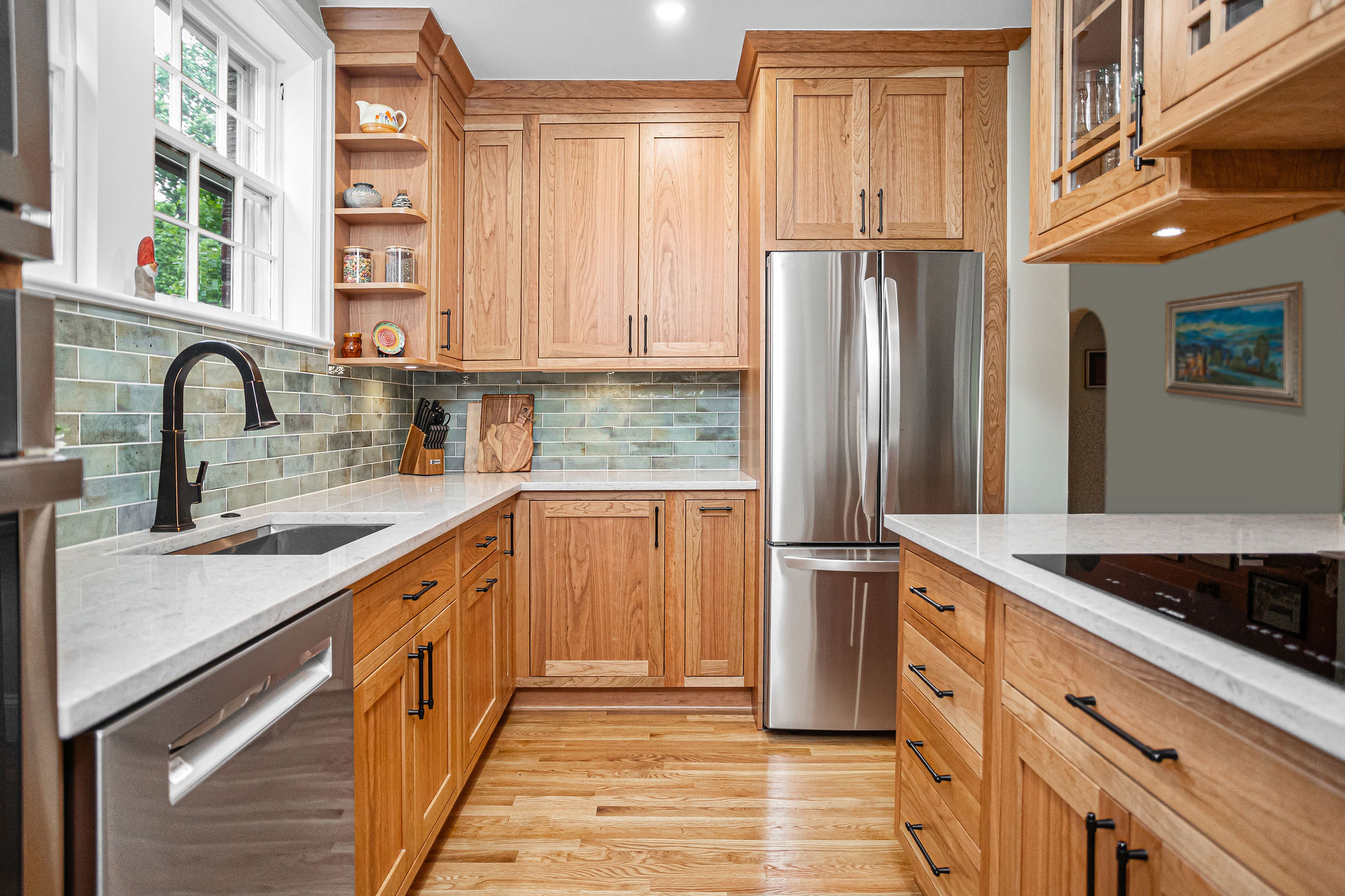
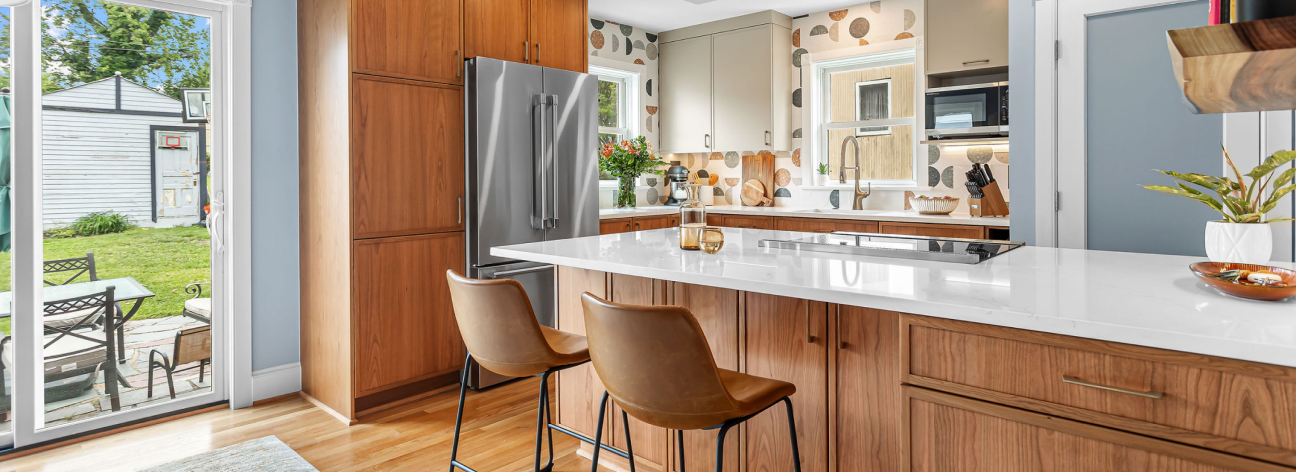
That means cooking, gathering, and circulation each have their own clear zone. The cook has uninterrupted counter space and a layout that doesn't require stepping around anyone to reach the sink. The island or peninsula gives children a place to sit that isn't in the way. Sightlines from the kitchen reach the living area, so no one is cooking in isolation.
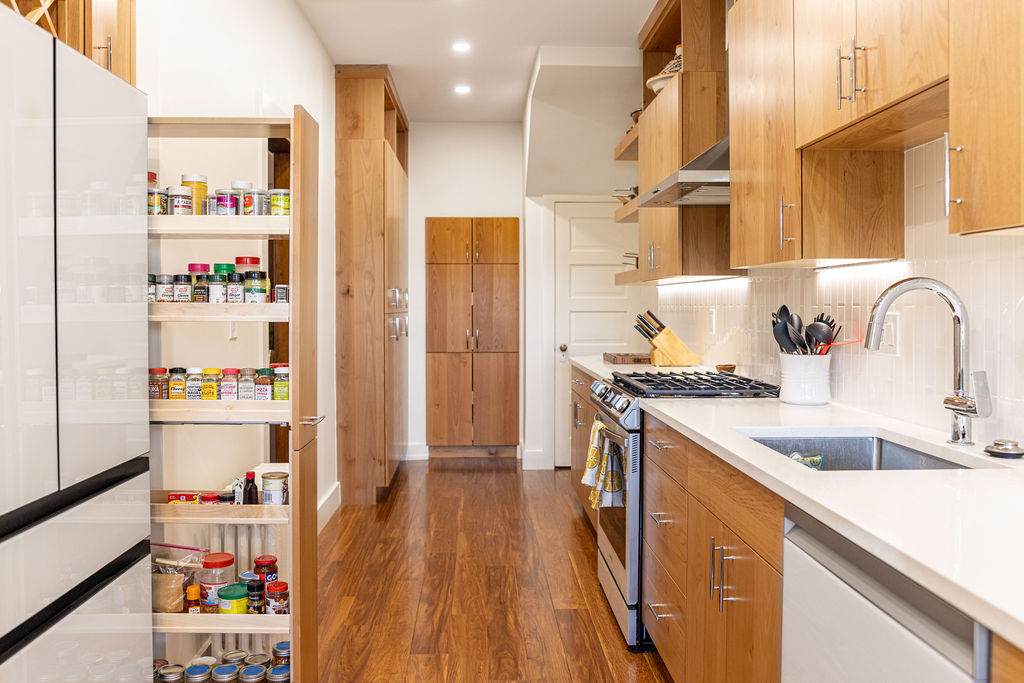
Cabinetry plays a larger role here than most homeowners expect before a DC kitchen remodel. Storage organized around how a family cooks (not just how much they own) changes how the kitchen feels on a Tuesday night. Pull-out shelving for pots and pans. A drawer configuration that keeps daily-use items within reach. A pantry that is calm to open, not something to dig through.
On weekends, the kitchen shifts. The pace changes. There's time to cook something that takes longer. Friends come over. The kitchen that works for a school morning also needs to work for a Saturday afternoon when adults are talking across the island and no one wants to stop to find the serving dishes.
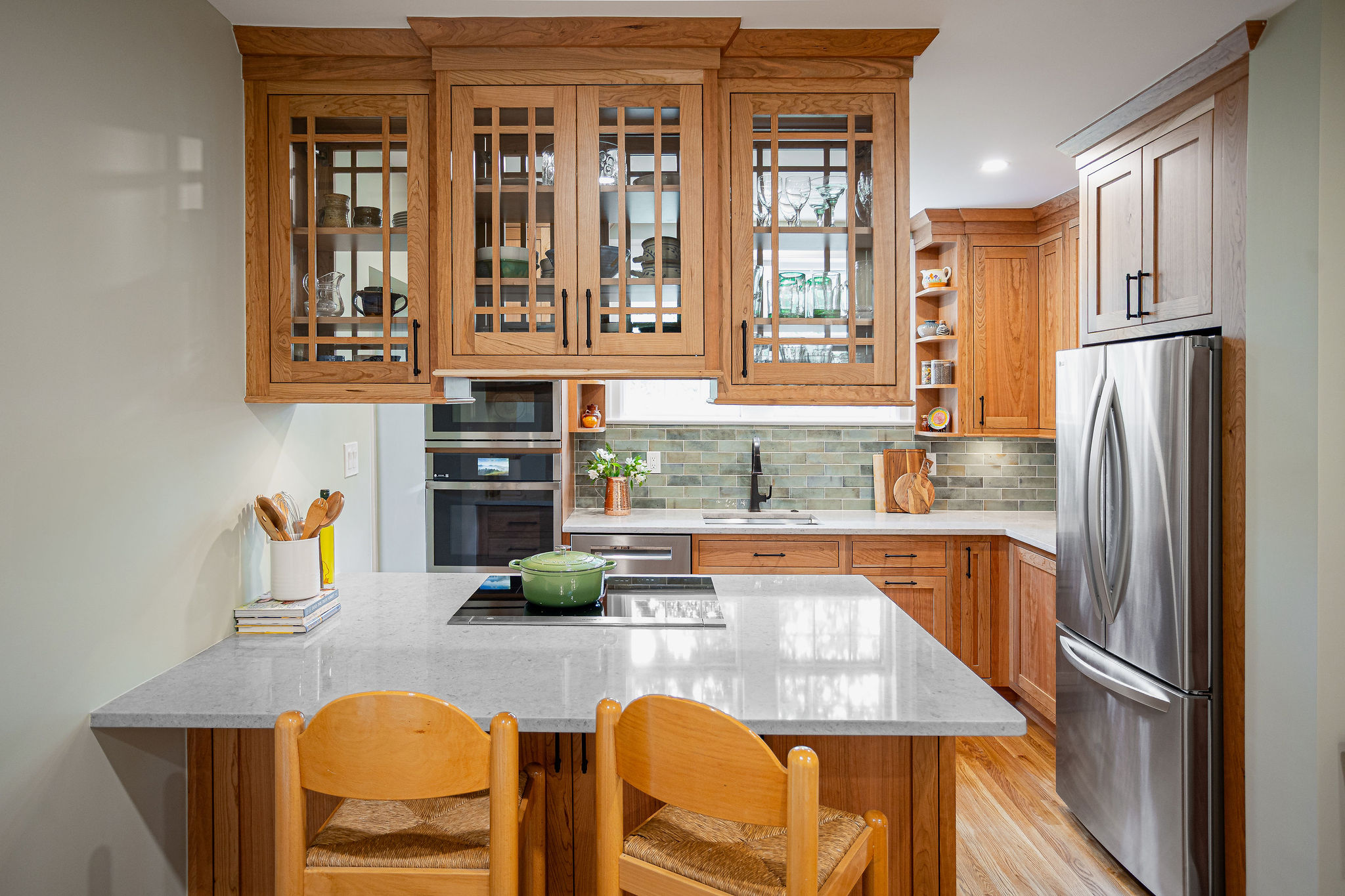
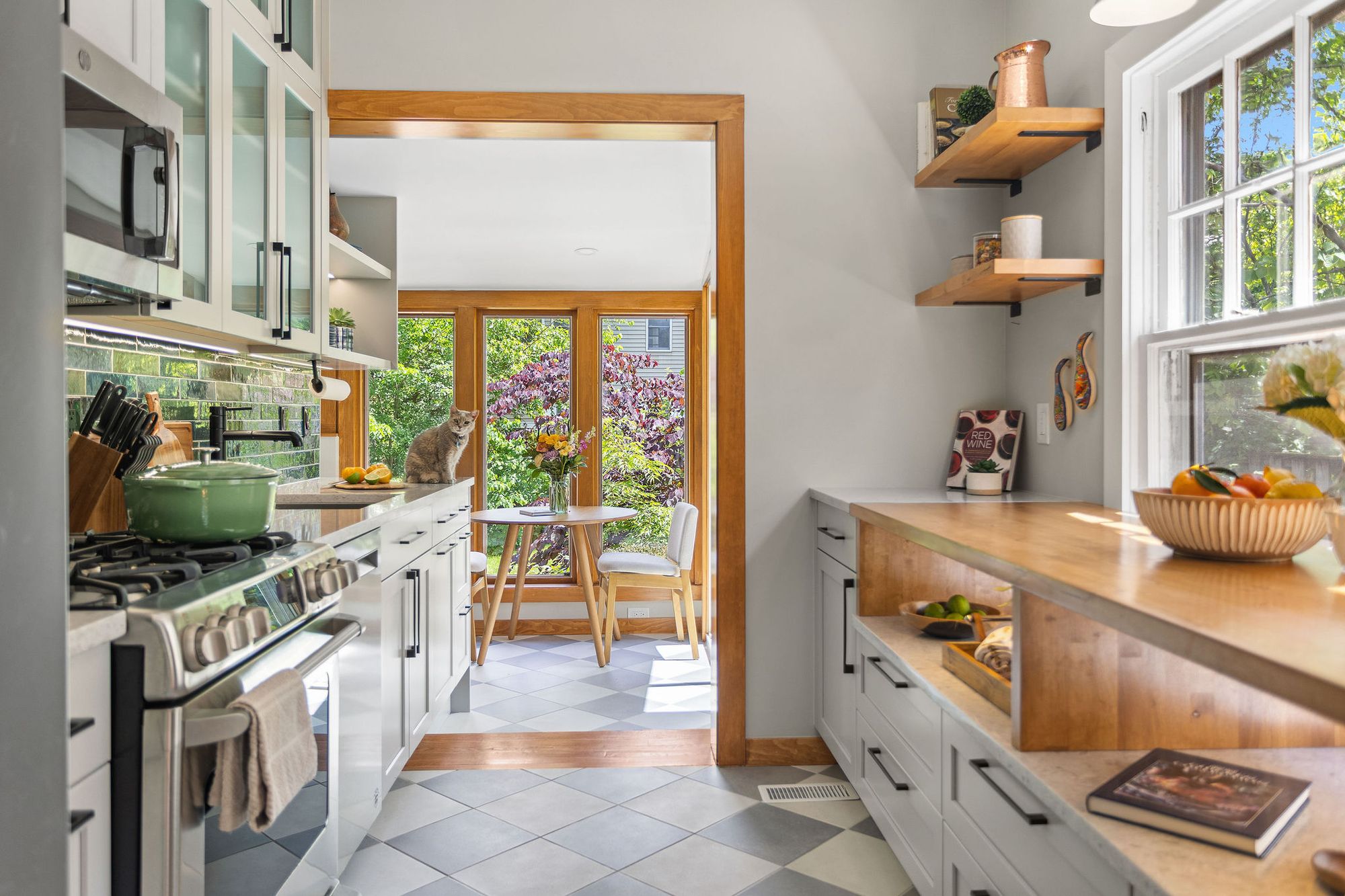
This is where layout decisions made for weekday efficiency pay an unexpected dividend. A clear path from the kitchen to the back porch or dining room makes weekend entertaining feel easy. Counter space that isn't consumed by appliances creates room for the kind of cooking that happens slowly. A kitchen island with seating on both sides creates a center of gravity that pulls people in rather than keeping them at the edges.
In Shepherd Park colonials, a kitchen-porch expansion, where the kitchen often connects directly to a back porch or rear yard, that indoor-outdoor relationship is one of the most considered design decisions we make.
The kitchen doesn't change on weekends. The family does. A well-designed kitchen accommodates both.
Once you understand how a household moves through the kitchen each day, the next step is translating those habits into spatial layout. Our guide on kitchen flow design for historic DC rowhomes explores how layout supports everyday movement - and why the constraints of Capitol Hill architecture are often an advantage, not a limitation.
The first thing we ask homeowners is how they use their kitchen right now. What happens on a school morning? Who cooks on weeknights? What does a Saturday look like?
Those answers shape everything: the kitchen work zones, the storage, the flow. The decisions are smaller and more specific, and the result is a space that stays calm under the weight of daily life.
Through our partnership with Crystal Cabinet Works, every Zen kitchen kitchen design in Washington DC includes semi- or fully custom kitchen cabinetry designed specifically for your space. Family-owned for 76 years, built in the U.S., and backed by a limited lifetime warranty - cabinetry is designed as part of your renovation from day one, not sourced afterward.
Calm by design, our process provides clarity and structure throughout your kitchen renovation. You make the decisions; we guide the experience.
We start with a 30-minute call to understand your goals and confirm we're a fit. If it feels right, we schedule an on-site visit to walk your kitchen, take measurements, and explore what's possible within your budget. We ask about your routines, not just your wishlist.
Complimentary 3D Design Mock-Up For kitchen renovations, we may offer a photorealistic rendering using our Chief Architect system. You can see how your layout, sightlines, and cabinetry work before signing a contract.
Your designer guides you through two phases, schematic layout and detailed finish selections, with your budget and how your family lives at the forefront of every decision. Cabinetry, countertops, lighting, and storage are all considered together, not assembled separately.
Your dedicated project manager becomes your single point of contact. They coordinate DC permitting, manage material deliveries, and oversee construction from demolition through finishing details. When decisions arise, they come to you with clear options before proceeding.
Step 4: Completion & Warranty We walk the space together to confirm everything functions as intended. Every renovation comes with a five-year workmanship warranty along with Crystal Cabinet Works' limited lifetime warranty.
Learn more about our complete process.
A kitchen remodel in Washington DC by Zen starts at $85,000 and can go up to $200,000 depending on scope, finishes, and structural considerations. Before any contract is signed, you'll have a clear picture of what your renovation will cost.
Your budget is part of the first conversation. Design decisions, finish selections, and scope are all centered on that number from the start.
View our pricing guide and what to expect.
Washington DC homes were built for families from Petworth, to Mt. Pleasant, to Bethesda. The rowhouses of Capitol Hill and the colonials of Shepherd Park have supported daily life for more than a century. A kitchen designed around how a family actually moves through the day, from the first school morning to the last weekend dinner, honors that.
When the kitchen works, the day starts calmer, the evenings feel less fragmented, and the weekend has more room to breathe.
Ready to talk about your kitchen? Schedule a 30-minute consultation to explore what's possible.


.avif)


